
To Catch a Monarch
Naturalist and Outdoor Program Leader Holly Henderson shares science and her fascination with these remarkable insects.
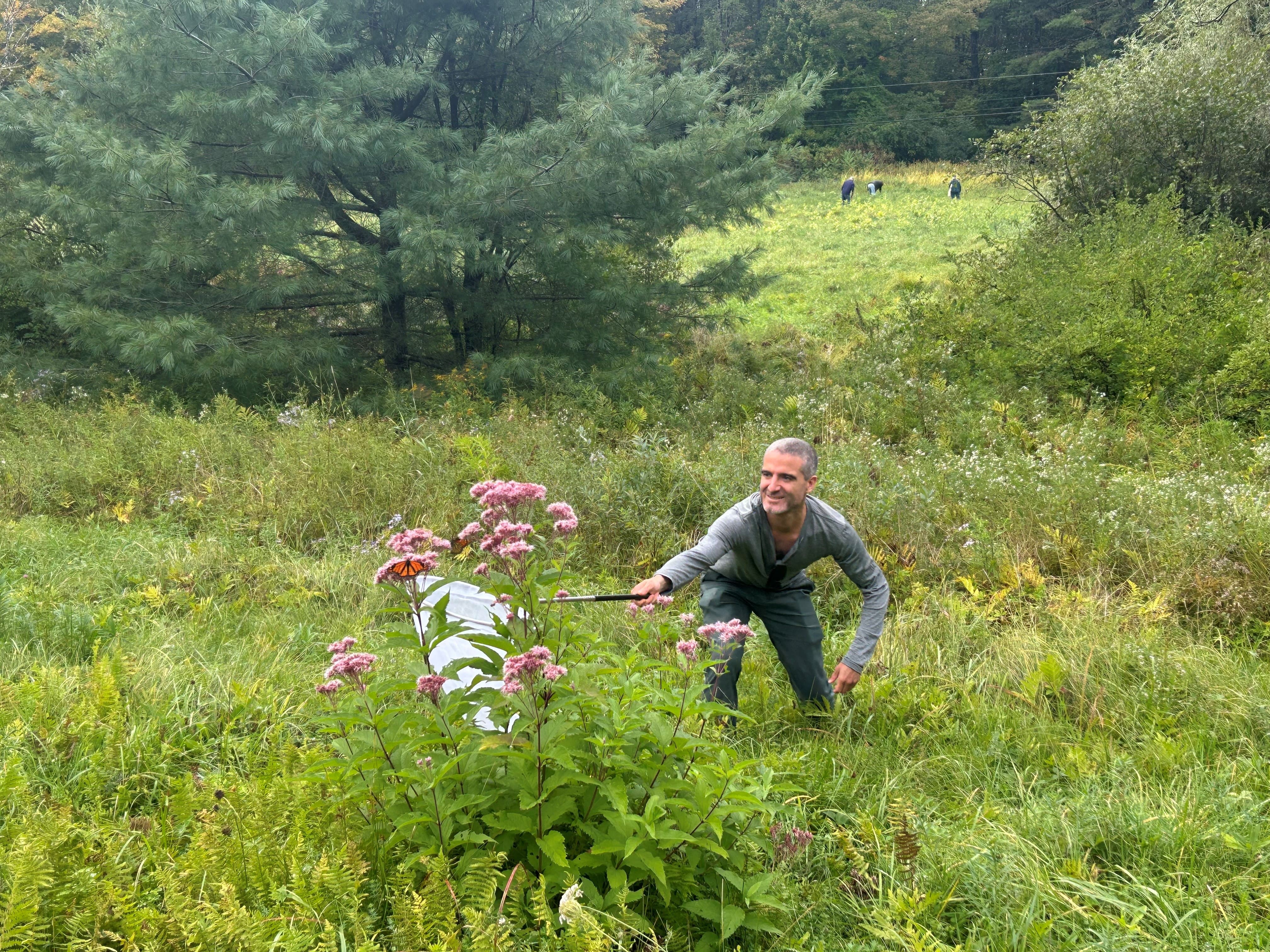
There’s something about monarch butterflies, isn’t there? Whenever I see one, I’m compelled to stop and stare. Perhaps it’s their stunning colors, the way they flap and soar like a hawk, or how something so fragile can withstand a 2,000+ mile journey to its overwintering grounds. Whatever “it” is, it also captivated those who joined me in a recent tagging event during peak migration season.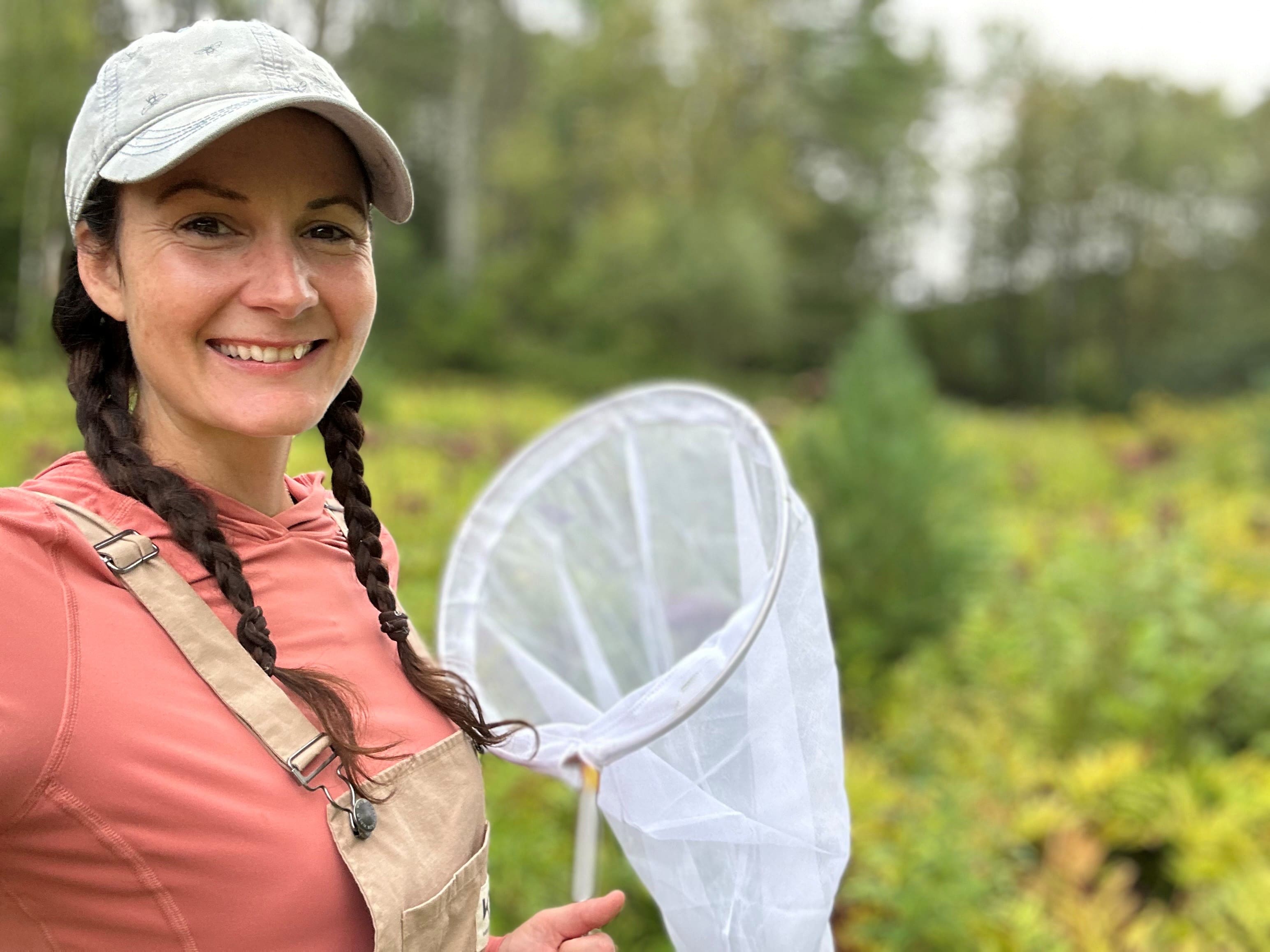
UVLT celebrated 40 years of conserving land in the Upper Valley this June by hosting a gathering at Ely Mountain Conservation Area in Thetford, VT, involving nature walks, music, lively conversation, and strawberry shortcake. Prior to the event, we mowed the area’s large field and the young, tender shoots of milkweed that resprouted there in July made an ideal location for female monarchs to lay their eggs. After counting more than 50 caterpillars in August, I decided this would be an excellent site to host a tagging event.
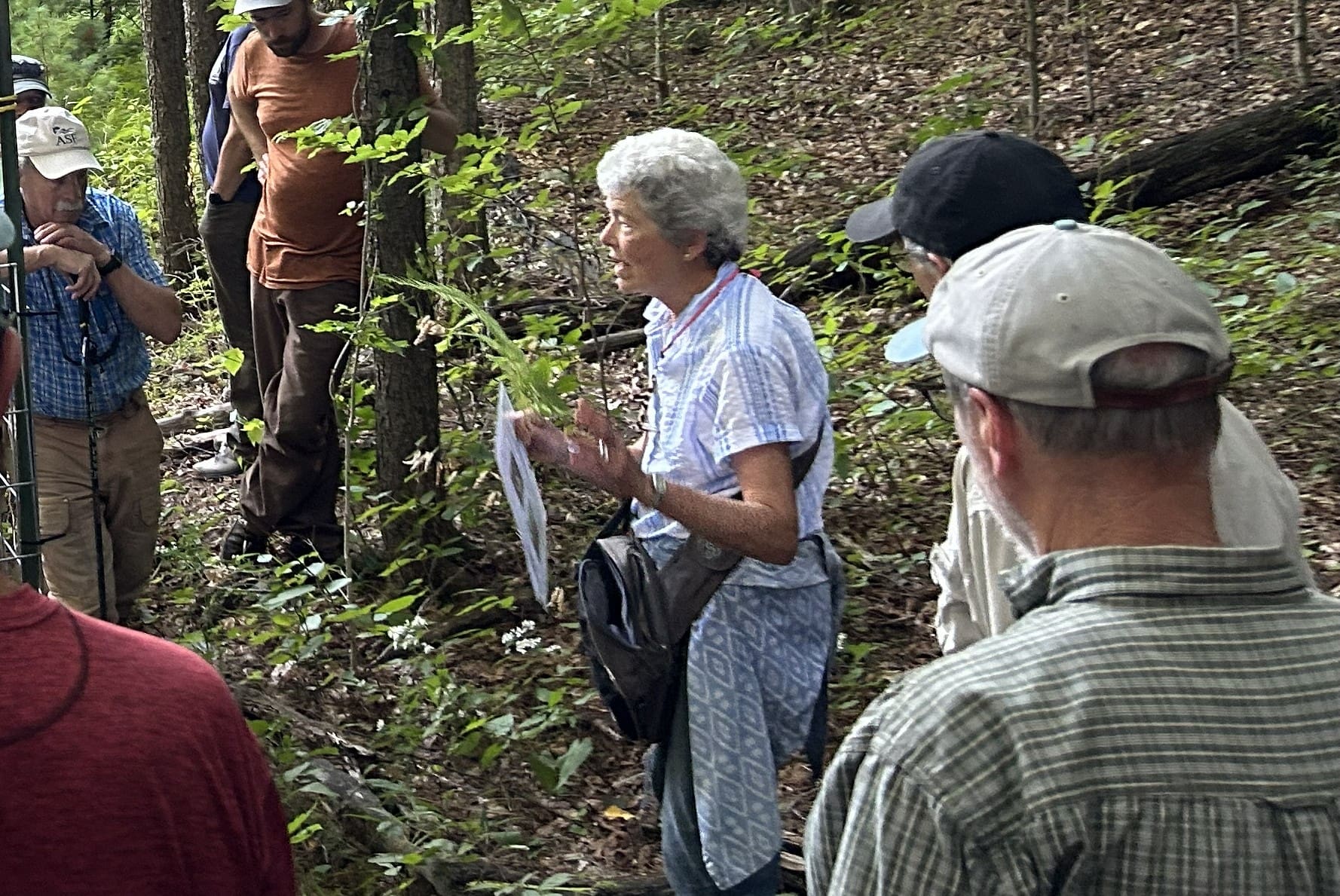
On a sunny afternoon in mid-September, a dozen people joined me at Ely Mountain to capture and tag monarchs. Before we set off, I explained the life history of monarchs and how tagging helps scientists and conservationists track migration routes, study survival rates, and understand how environmental changes could affect populations.
Here’s how monarch migration works. Reduced sunlight and cooler temperatures in late summer and early fall trigger a long-lived “super” generation to be born. These individuals live 8-9 months and migrate 50-100 miles/day south to the oyamel fir forest in south-central Mexico, where they roost in massive colonies before beginning their journey back north in March. The second generation continues north, and females lay eggs as they go. The butterflies that reach the Upper Valley are likely the third generation from the super monarch generation that left the prior fall.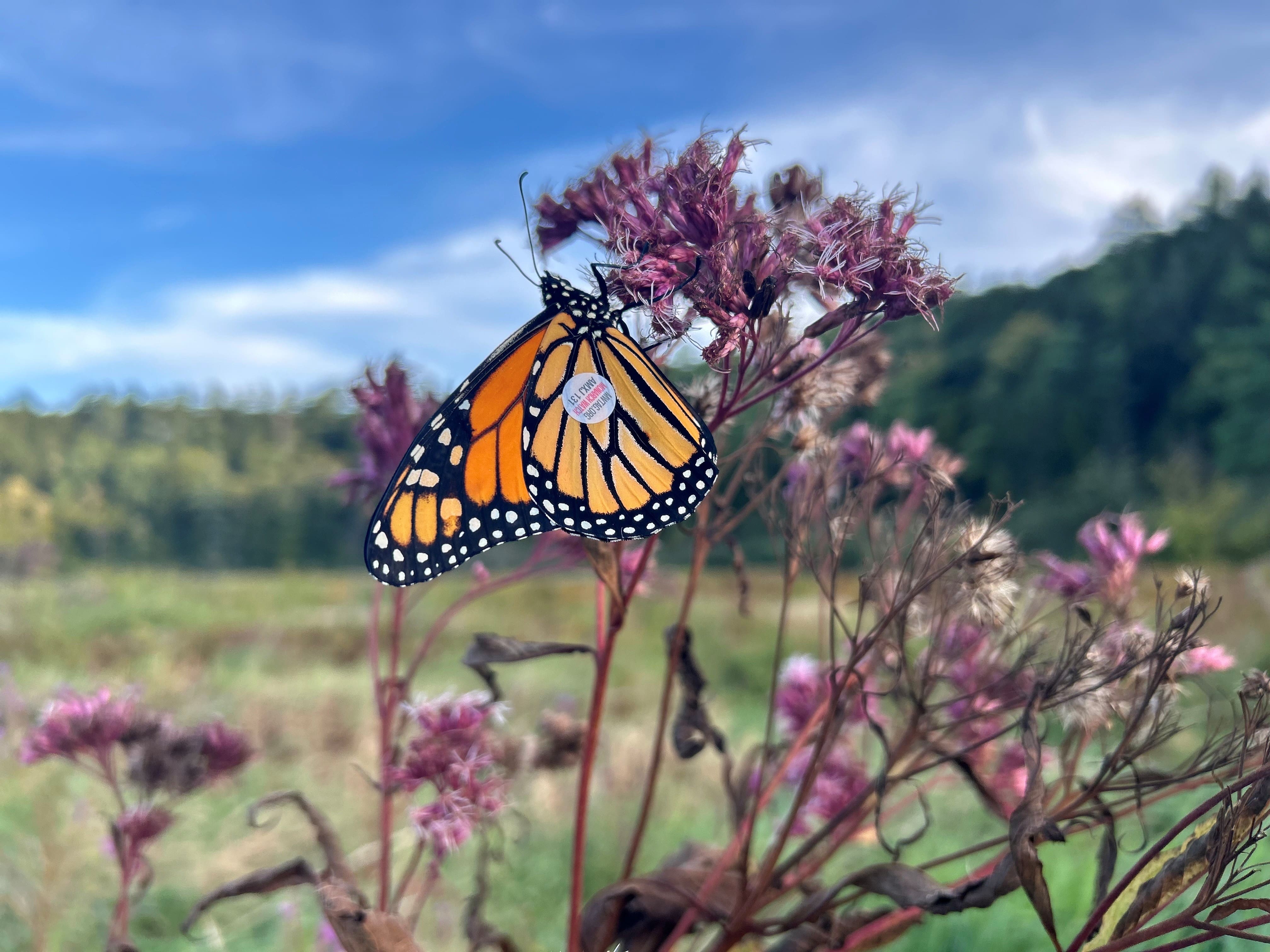
That afternoon at Ely Mountain, we captured six adults: four females and two males, as evidenced by small scent patches on the males’ hindwings. Using delicate, trained handwork, I affixed to each a uniquely coded tag, provided by Monarch Watch. If these butterflies are recaptured somewhere down south, Monarch Watch will notify us when and where they were found.
Monarch numbers have dropped 80 percent in recent decades, driven primarily by a loss of breeding and overwintering habitat. One of the most beneficial ways you can support monarchs (and other wildlife) is to plant or maintain stands of milkweed, which is their host plant and necessary for their survival. You can also support land trusts like UVLT that conserve and maintain field conditions in certain places.
If you missed this special event, be sure to keep a look out next year for another opportunity to join in! Or you can email me at holly.henderson@uvlt.org and I’ll let you know when we set a date.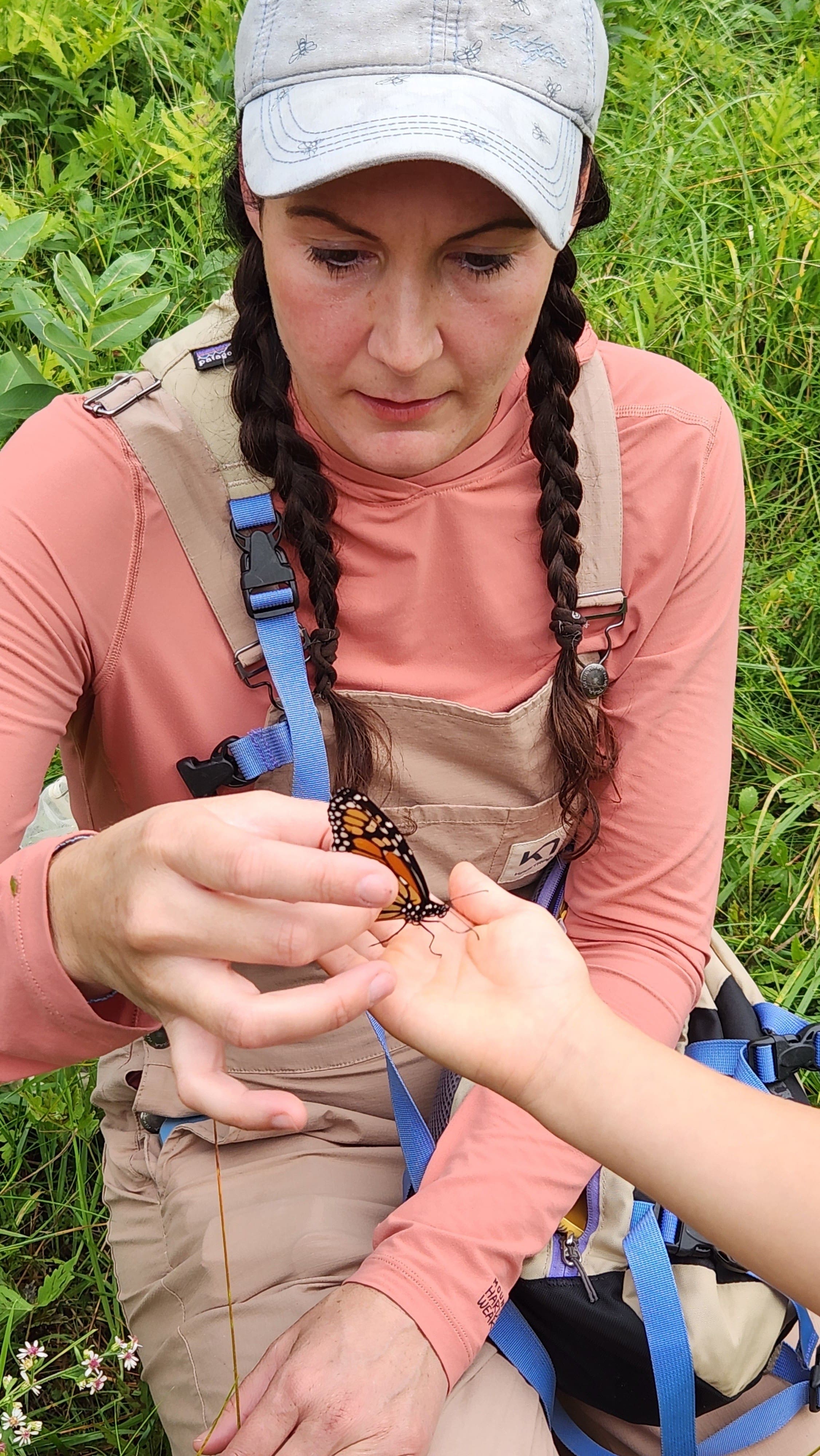
Visit UVLT’s YouTube channel to view videos of monarch and caterpillar presentations.

Leave a Reply
Want to join the discussion?Feel free to contribute!