
Event Report: Overabundant White-Tailed Deer and Our Forest Health
“The problem isn’t too many deer, it’s that there isn’t enough habitat to support the populations of deer we have in certain places.” Nick Fortin, Vermont Fish and Wildlife’s wildlife biologist and deer project leader was speaking specifically about UVLT’s Brookmead Conservation Area in Norwich, but the problem exists throughout the region.
“That might sound surprising” says Naturalist and Outdoor Programs Leader Holly Henderson, “but when you consider that deer depend on young trees within foraging reach and that we altered the dynamic successional patterns of our forests when we cut down all our trees in the 1700s-1800s and allowed many of them to grow back at even ages, this phenomena suddenly makes sense.”
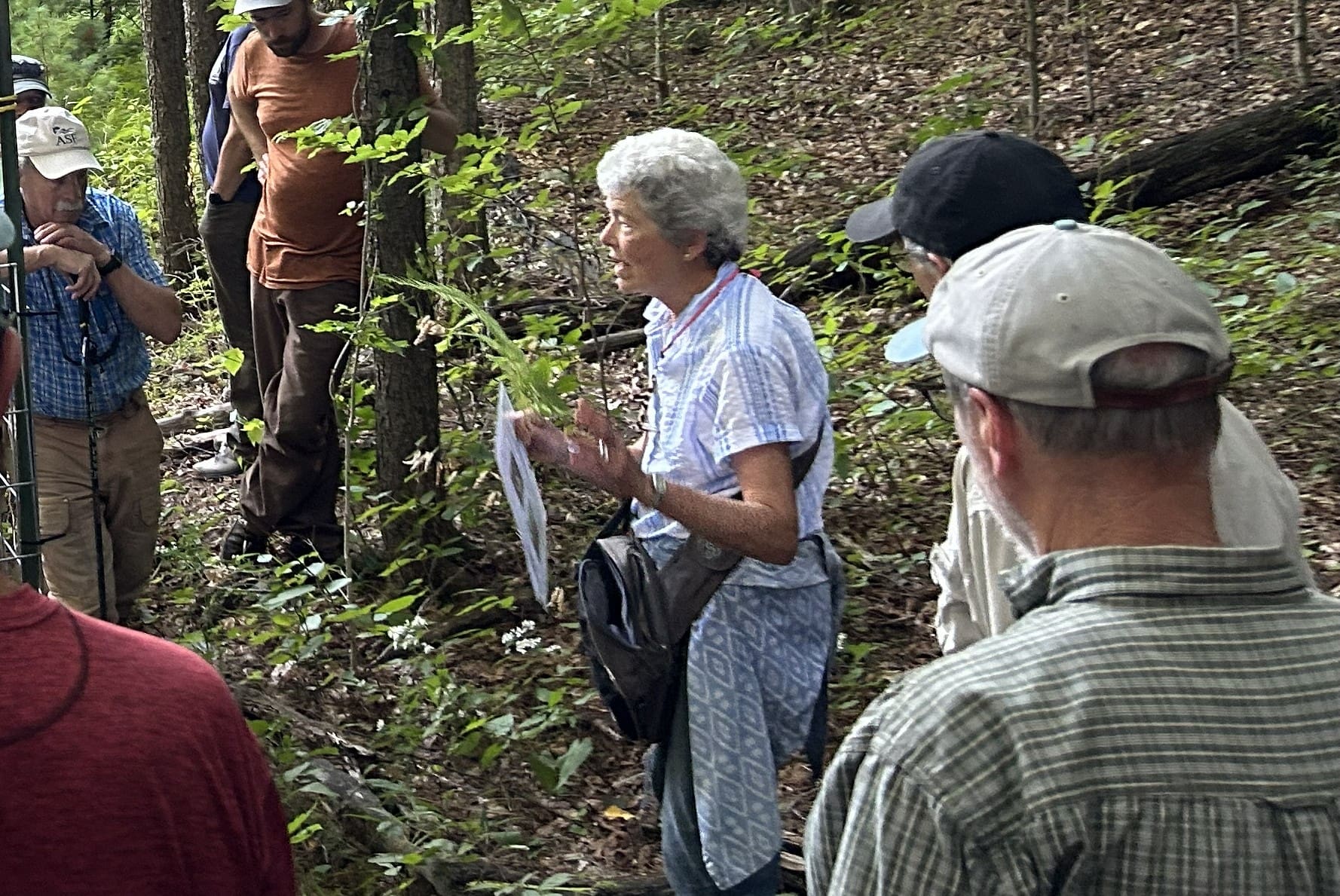
Over two dozen attendees from towns around the Upper Valley saw first-hand on August 31 what white-tailed deer overabundance looks like. The event featured deer and tree experts including Fortin, NH Fish and Game’s deer project leader Rebecca Fuda, VT Windsor County Forester Dan Healey, and NH Grafton County Forester James Frohn, and was co-sponsored by the Hanover Biodiversity Committee and the Norwich Conservation Commission.
Brookmead provided an instructive setting, with trip leaders pointing out different favored tree species and less palatable varieties along the trail. Dan Healey noted that preferred species were in such limited supply that deer were compelled to eat less desirable plants like American beech and (invasive) common buckthorn.
Barbara McIlroy of the Hanover Biodiversity Committee explained how the beautiful spring ephemerals we find on the forest floor in spring are often a tell-tale sign of deer overabundance in our forest, as evidenced by the red trillium monitoring “exclosures” her group worked to put up around Hanover in recent years. Fortin shared that given the current lack of regeneration, the roughly 250-acre property could probably only support about five deer, but evidence pointed to 10 or more living on or frequenting the property.
Several gap openings were created at Brookmead a little over a decade ago to let in sunlight, with the intention of regenerating a diversity of native species such as northern red oak, sugar maple, and yellow birch. “Instead, we had to search closely beneath densely matted carpets of New York and hay-scented fern to find this diversity,” reports Holly. “The favored trees and herbaceous plants had been nibbled down to oddly formed shapes that were difficult to spot as they struggled to reach sunlight.”
The walk ended at a deer exclosure erected by Norwich Conservation Commission two years ago to demonstrate what plant regeneration would be like in a scenario where deer are limited. “Because the plot is so new, the trees within the cage weren’t impressive in size, but its red maple seedlings were pleasing to see as these were all but absent along the trail,” notes Holly. “If you ever find yourself along the trail at Brookmead, consider taking a look at the exclosure to see how the trees are faring compared with the those on the outside!”
A Valley News article provides additional information.
Save the date for an upcoming women’s deer hunting education and venison tasting event with Hanover Biodiversity Committee on October 28 and keep an eye out for future events with UVLT to learn more about solutions and ways you can help address this issue. The town of Hanover’s website has additional information on Deer Management and Forest Health.


Leave a Reply
Want to join the discussion?Feel free to contribute!